Senior-Subordinate Structure
MBS credit structure in which subordinate classes protect senior classes by taking specified losses first.
A senior-subordinate structure is a securitization arrangement in which subordinate investor classes absorb specified losses before more senior classes.
Why It Matters
Senior-subordinate structure matters because it can create different levels of credit protection from the same mortgage collateral. The senior class benefits from the loss-absorbing capacity beneath it, while subordinate classes accept greater exposure to losses in exchange for their place in the structure.
The arrangement is a form of internal Credit Enhancement. It is especially important in Non-Agency MBS, where investor protection may depend on transaction design, collateral quality, excess spread, reserves, and other support rather than an agency guarantee.
Subordination does not make the senior class risk-free. If collateral losses use up the subordinate protection, losses can reach higher classes. The amount of protection and the rules for maintaining or releasing it depend on the transaction documents.
Where It Appears in the Borrower Process
Borrowers do not normally see senior-subordinate structure in applications, disclosures, or monthly statements. It appears after loans are pooled and securitized, in offering documents, payment waterfalls, credit reports, and investor analysis.
The borrower-facing value is explanatory. It helps show why a non-agency mortgage can move into a security with several investor risk classes even though the borrower still has one note and one required payment. Tranching the security does not create additional liens against the home or change the mortgage contract.
How the Priority Works
| Position | General role | Credit exposure |
|---|---|---|
| Senior class | Has higher payment and loss priority under the waterfall | Protected by classes below it until that support is exhausted |
| Mezzanine class | Sits between senior and first-loss positions when used | Protected by more junior support but exposed before senior classes |
| Subordinate class | Provides first-loss or early-loss support | Absorbs covered losses before higher classes |
Cash distributions and losses generally move through the capital structure in opposite priority directions. The simplified diagram shows the concept, not the legal terms of every MBS transaction.
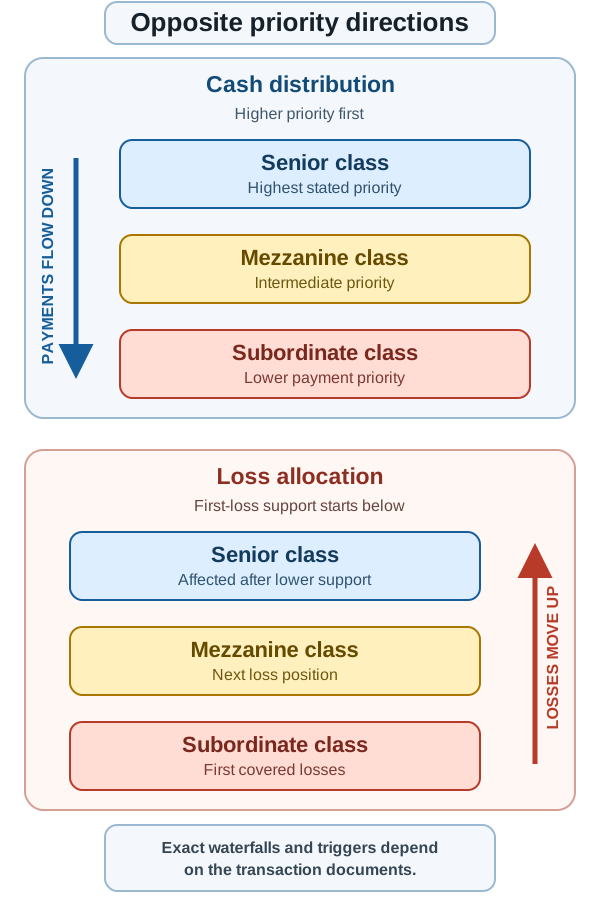
The payment waterfall can also include triggers. If delinquencies or losses rise, transaction rules may redirect principal, delay distributions to subordinate classes, or preserve support for senior classes. These protections are defined by the governing documents rather than by the words senior and subordinate alone.
Practical Example
A non-agency MBS has $100 million of collateral and three classes:
- $85 million senior;
- $10 million mezzanine; and
- $5 million subordinate.
In a simplified first-loss arrangement, the first $5 million of covered collateral losses is allocated to the subordinate class. Additional covered losses may then affect the mezzanine class. The senior class begins with $15 million of structural support beneath it, but that support declines as lower classes absorb losses.
The example does not mean the senior class can never lose principal. If covered losses exceed the available subordinate and mezzanine support, or if the documents allocate a loss differently, the senior class can be affected.
What Determines the Protection
The label alone is not enough to measure safety. Analysts also review:
- the amount of subordinate support relative to collateral;
- borrower, property, and loan characteristics in the Mortgage Pool;
- delinquency, modification, liquidation, and recovery behavior;
- Excess Spread or reserve support;
- rules that change cash allocation when performance deteriorates; and
- how and when subordination can be reduced or released.
Two securities can both use senior-subordinate language while providing very different protection.
How It Differs From Nearby Terms
Senior-subordinate structure differs from Tranche because a tranche is an individual class. Senior-subordinate describes the priority relationship among classes.
It differs from Credit Enhancement because credit enhancement is the broader category. Subordination is one internal method; insurance, guarantees, reserves, or other support may work differently.
It differs from Agency Guarantee because a guarantee is a promise by the named guarantor under the security terms. Subordination allocates losses within the capital structure.
It also differs from a sequential-pay Collateralized Mortgage Obligation. Sequential pay mainly redirects principal timing. Senior-subordinate structure primarily describes credit and loss priority, although one transaction can use both mechanisms.
Related Terms
- Non-Agency MBS
- Credit Enhancement
- Excess Spread
- Tranche
- Collateralized Mortgage Obligation
- Mortgage Pool
- Agency Guarantee
- Pooling and Servicing Agreement
Knowledge Check
- What does the subordinate class usually do in this structure? It absorbs specified losses before more senior classes under the transaction waterfall.
- Is senior-subordinate structure the same as a tranche? No. Tranches are classes; senior-subordinate describes the priority relationship among classes.
- Does a senior label guarantee that a class cannot lose principal? No. Senior protection can be exhausted, and the exact rights depend on the governing documents.