Second-Lien HELOC
Revolving home-equity line recorded behind an existing first mortgage in lien priority.
A second-lien HELOC is a revolving home-equity line recorded behind an existing first mortgage in lien priority. It adds a separate secured account without replacing the first mortgage.
Why It Matters
Many homeowners choose a second-lien HELOC because they want to preserve an existing first mortgage while adding flexible access to equity. The tradeoff is a second payment obligation and another recorded claim against the property.
Lien position affects the junior lender’s collateral risk. If the property is sold through foreclosure, senior claims generally receive priority according to applicable law before a junior lien is paid. That added risk can influence underwriting, credit limits, and pricing.
The position also matters to the borrower during a sale, first-mortgage refinance, payoff, or later home-equity request. Both liens must be identified, and keeping the HELOC through a refinance can require subordination.
Where It Appears in the Borrower Process
Borrowers encounter the term during Home Equity Application and title review. The HELOC lender verifies the first-mortgage balance, other liens, property value, and proposed line amount to calculate CLTV and establish the intended priority.
After opening, the HELOC’s security instrument appears in the property records. Drawing from or repaying the line changes the account balance, but not automatically the recorded lien position. A zero balance can still leave the line open and the lien in place.
Second-Lien HELOC Compared
| Structure | What it usually means |
|---|---|
| First Lien mortgage | Primary mortgage lien on the property |
| Second-lien HELOC | Revolving home-equity line behind the first mortgage |
| First-Lien HELOC | HELOC in the primary lien position |
| Cash-Out Refinance | New first mortgage that replaces the old one and provides cash |
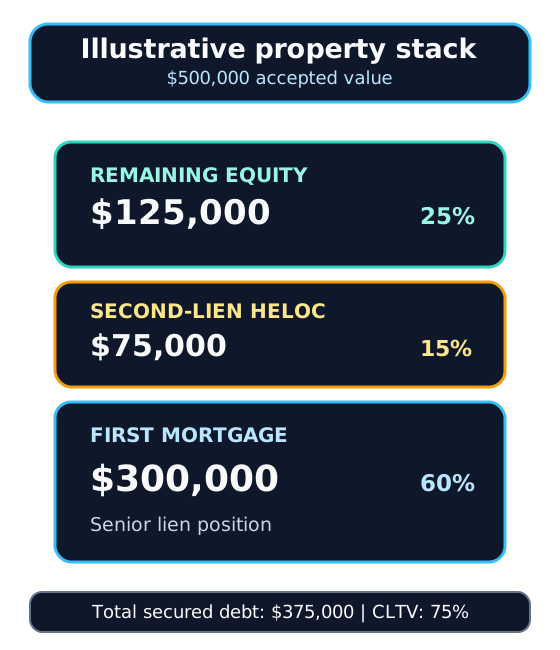
The illustration shows debt and remaining equity, not guaranteed sale proceeds. Property value, payoff amounts, selling costs, and lien rights can all change the final result.
Practical Example
A homeowner’s property is accepted at $500,000, and the existing first-mortgage balance is $300,000. The lender approves a $75,000 HELOC in second position.
If the line is fully drawn, total secured debt is $375,000, producing a 75% CLTV and leaving $125,000 of equity before transaction costs. The first mortgage remains the senior lien; the HELOC is the junior lien.
Borrower Decisions Before Opening
- compare the first mortgage’s existing rate with the cost of replacing it through cash-out refinance
- compare HELOC variable-rate risk with a fixed home equity loan
- calculate payments using both the first mortgage and expected HELOC balance
- review the maximum CLTV and remaining equity cushion
- identify annual, opening, draw, and early-closure fees
- understand how a later first-mortgage refinance would handle the HELOC
Keeping a low-rate first mortgage can be valuable, but that benefit should not hide the cost and risk of carrying two secured obligations.
What Happens in a Later Transaction
| Later event | Typical HELOC issue |
|---|---|
| Sale | Obtain payoff, close the line, and release the lien |
| First-mortgage refinance | Pay off the HELOC or request HELOC Subordination |
| Additional home-equity borrowing | Count all existing liens and confirm priority |
| HELOC paid to zero | Decide whether to keep the line open or complete closure and release |
The title and lending professionals handling the transaction determine the documents and sequence required for that property and jurisdiction.
How It Differs From Nearby Terms
Second-lien HELOC differs from Second Mortgage because second mortgage is the broad lien category, while second-lien HELOC is a specific revolving credit line inside that category.
It differs from First-Lien HELOC because a first-lien HELOC sits in the primary lien position rather than behind another mortgage.
It also differs from HELOC Subordination because subordination is the process or agreement that may keep the HELOC behind a new first mortgage during refinancing.
It differs from a Home Equity Loan, which is usually a closed-end lump-sum second mortgage. A HELOC is open-end and can support repeated draws while access remains permitted.
Related Terms
- Home Equity Line of Credit (HELOC)
- Second Mortgage
- First-Lien HELOC
- Home Equity Lien
- HELOC Subordination
- Junior Lien
- First Lien
- Cash-Out Refinance
Knowledge Check
- A borrower pays a second-lien HELOC to zero. Does the first mortgage become the property’s only recorded lien automatically? No. The HELOC account and security instrument can remain open until closure and release are completed.
- Why might refinancing the first mortgage require HELOC subordination? The new first-mortgage lender wants its replacement lien to remain senior to the existing HELOC.