Appraisal Gap
Difference between a purchase price and lower appraised value that may change LTV, loan amount, or cash to close.
An appraisal gap is the difference between the agreed purchase price and the lower value supported by the appraisal.
Why It Matters
An appraisal gap matters because lenders usually base leverage decisions on supported value, not just on the contract price. If the appraisal comes in lower than expected, the borrower may need to bring in more money, renegotiate the price, or use a contract contingency.
It also matters because a seemingly small valuation shortfall can change the financing math materially, especially when the buyer was already operating with a limited down-payment cushion.
Where It Appears in the Borrower Process
Borrowers encounter the appraisal gap after the appraisal is completed and the file is moving through underwriting and toward closing.
The issue becomes most urgent when the supported value affects Loan-to-Value Ratio (LTV), Cash to Close, and whether the contract needs to be renegotiated.
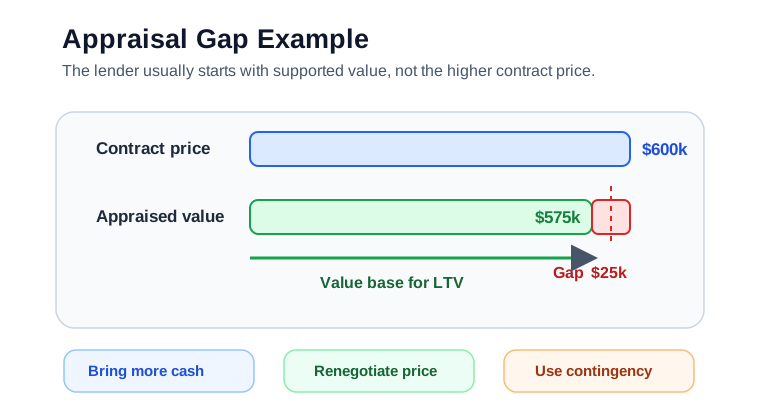
The diagram below shows the basic borrower problem: the lender may use the lower supported value for the LTV calculation, while the gap between that value and the contract price still has to be resolved by the parties.
How Lower Value Changes Financing
For many purchase mortgages, LTV is calculated using the lower of the purchase price or appraised value. The appraisal gap and the resulting loan reduction are related, but they are not always the same amount.
| Illustrative 80% LTV purchase | Before low appraisal | After low appraisal |
|---|---|---|
| Contract price | $600,000 | $600,000 |
| Value used for LTV | $600,000 | $575,000 |
| Maximum loan at 80% | $480,000 | $460,000 |
| Buyer funds toward price | $120,000 | $140,000 |
Here, the appraisal gap is $25,000, while maintaining an 80% LTV reduces the maximum loan by $20,000. The buyer’s funds toward the price rise by $20,000, before closing costs and credits. A lender may also evaluate another eligible LTV, mortgage-insurance, or loan structure, so the borrower should obtain an updated cash-to-close calculation rather than assume the entire gap must be added dollar for dollar.
A Practical Review Sequence
Before committing more cash, the borrower should obtain the appraisal, verify factual property data, ask the lender about review or reconsideration procedures, and understand the purchase contract. If the value stands, the parties can evaluate a price reduction, additional buyer funds, a revised loan structure, or rights under an appraisal contingency. Contract deadlines still apply while the valuation is being reviewed.
Common Ways an Appraisal Gap Gets Handled
| Response | What it changes |
|---|---|
| Buyer brings in more cash | Increases the money needed to close |
| Seller reduces the price | Shrinks or removes the gap |
| Parties renegotiate or split the difference | Shares the valuation shortfall |
| Buyer uses a contract protection | May rely on the Appraisal Contingency |
Where Review Fits Before the Parties Choose a Gap Strategy
| Stage | Why it matters |
|---|---|
| Value result comes in lower than expected | The borrower first needs to understand whether the appraisal is likely to stand. |
| Appraisal Review or Reconsideration of Value is considered | The file may still have a limited path to challenge or confirm the result. |
| Gap response is chosen | Only after that does the buyer usually decide whether to bring in cash, renegotiate, or exit under contract rights. |
Practical Example
A buyer agrees to pay $600,000, but the appraisal supports only $575,000. The $25,000 difference is the appraisal gap the parties now need to address.
How It Differs From Nearby Terms
Appraisal gap differs from Appraised Value because the appraised value is the lender-supported valuation number, while the appraisal gap is the mismatch between that number and the purchase price.
It also differs from Appraisal Contingency. The gap is the valuation problem itself. The contingency is the contract protection that may give the buyer options if that problem appears.
It also differs from Reconsideration of Value. The gap is the business problem caused by the low value, while reconsideration of value is one possible attempt to revisit the valuation result.
Related Terms
- Appraisal
- Appraised Value
- Appraisal Review
- Comparable Sales (Comps)
- Reconsideration of Value
- Appraisal Contingency
- Cash to Close
- Loan-to-Value Ratio (LTV)
Knowledge Check
- Why can an appraisal gap force a buyer to bring in more cash? Because the lender may base the mortgage structure on the lower supported value instead of the higher contract price.
- Is an appraisal gap the same thing as the appraisal contingency? No. The gap is the valuation mismatch, while the contingency is the contract protection that may apply when that mismatch occurs.